
Protect Growing School Data Securely with School ERP and Role-Based Access
Explore how role-based access in school management software helps schools protect sensitive data while giving teachers, staff, parents, and students the access they need.
#school management software #school erp #school management system #school software
01 Oct, 2026Not too long ago, "school data" meant cabinets stuffed with enrollment forms, attendance registers, and huge space filled with just folders and registers. Today, a modern school generates and handles more data in a single semester than it used to in a year.
All this data comes from different places like students related data, staff data to school finances data and many other data factors all are sit in the cloud-based school management software and as school grow their data become immense and also sensitive because they are finances related.
Managing this data is a critical operational and security mandate. Here is a look at how schools are handling data today, the massive challenges they face, and where educational data management is heading.
What is Role Management?
At its core, role management is a security and usability framework within the school management software that ensures users only have access to the information and tools necessary to perform their specific duties. Instead of assigning permissions to individuals one by one, administrators create predefined "roles" (e.g., Teacher, Accountant) and assign users to those roles.
If a teacher needs to update grades, they can. If they try to peek at the school's payroll data, the system firmly blocks them.
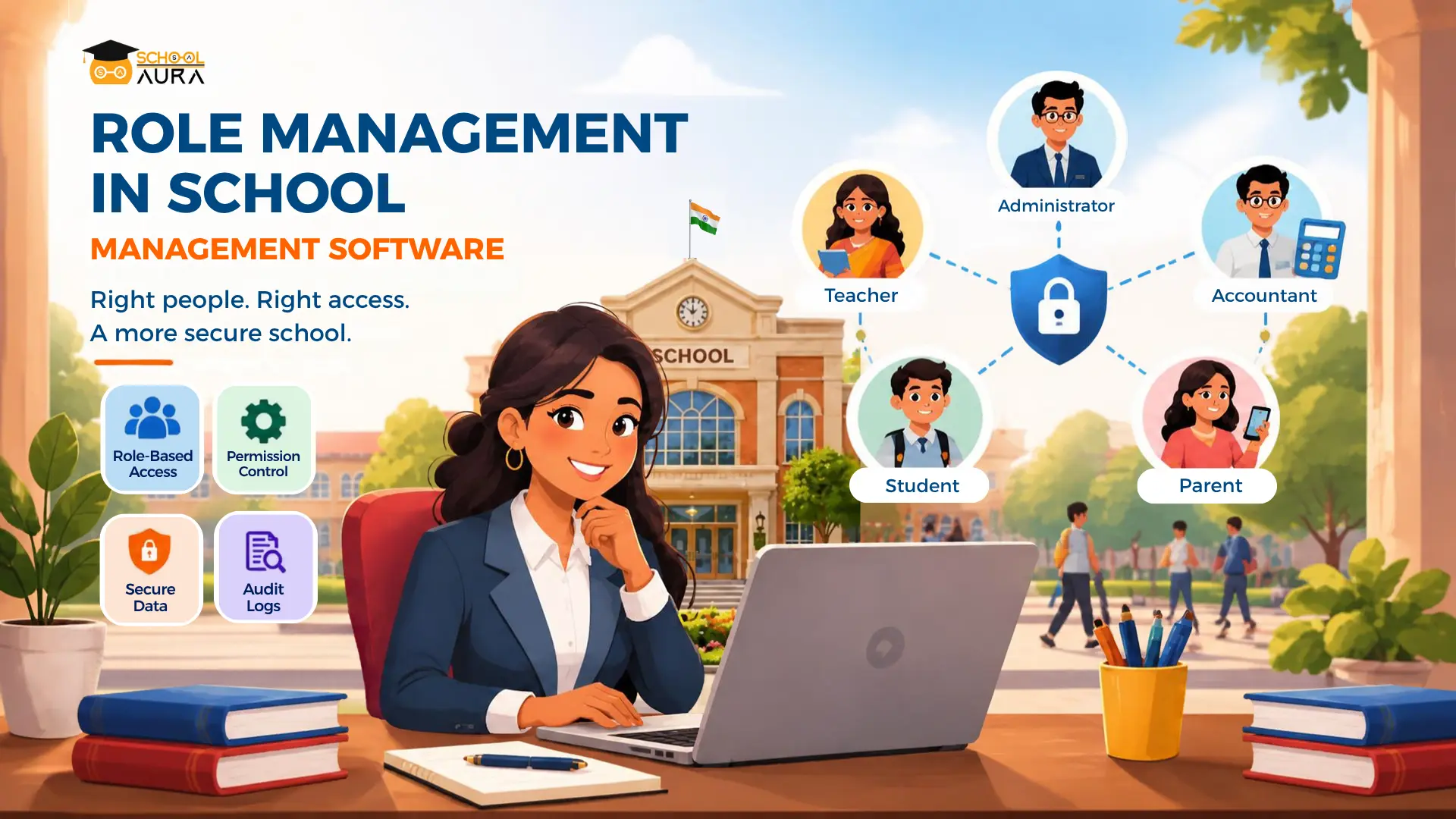
One Platform, Multiple Roles: Connecting the Entire School Community
A modern school management software is designed to serve everyone in the school community while ensuring that each user can access only the information relevant to their role. This not only improves efficiency but also keeps sensitive data secure.
School Administrators
They have the highest level of access within the system. They can monitor overall school performance, view reports, manage student and staff records, oversee finances, and configure system settings. This centralized control helps them make informed decisions and ensure smooth school operations.
Teachers
Teachers use the software to manage their day-to-day academic responsibilities. From taking attendance and recording grades to sharing assignments and communicating with parents, the system helps teachers stay organized and focus more on teaching.
Accountants & HR
They handle the school's financial and administrative functions. They can manage fee collections, process payroll, track expenses, maintain employee records, and generate financial reports. Their access is limited to operational and financial data, keeping academic information protected.
Parents
Parents receive a dedicated portal and generally a mobile app that keeps them connected to their child's educational journey. They can check attendance, view report cards, pay fees online, receive important notifications, and communicate with teachers all from the platform.
Students
Students benefit from easy access to learning resources and academic information. They can view timetables, submit assignments, access study materials, check exam schedules, and use digital learning materials, helping them stay engaged and organized.
By giving every member access to the tools and information they need, a school management software creates a more connected, transparent, and efficient learning environment.
The Dual Edge of School Data: Utility vs. Vulnerability
School data is incredibly valuable, which is exactly what makes it so difficult to manage. It serves a dual purpose:
Educational & Operational Power
Data allows educators to track student performance in real-time, identify learning gaps early. Operationally, it helps administrators optimize budgets, track attendance patterns, and streamline communication with parents.
A Goldmine for Cybercriminals
Schools hold vast amounts of every individual data from personal to their school related data that include school staffs and students also financial data from parents, and staff payroll information. This makes higher education institutions incredibly lucrative targets for malicious actors.
The Rising Threat Landscape in Education
The push toward 1:1 device programs (where every student gets a laptop or tablet), cloud computing, and remote learning has vastly expanded the attack surface for schools. IT departments in education are often underfunded and understaffed, making them prime targets for:
Ransomware Attacks: Education is one of the most heavily targeted sectors for ransomware. Hackers encrypt critical school data and demand payment to unlock it, completely paralyzing school operations.
Phishing: This remains the number one threat vector. Cybercriminals send deceptive emails to staff or students to steal login credentials, granting them access to school networks.
Accidental Exposure: Often, data incidents aren't malicious. A teacher might accidentally share an Excel file containing student grades with the wrong mailing list, or store sensitive data in an unsecured, publicly accessible cloud folder.
Things to Consider About Role-Based Access Control
Role-Based Access Control (RBAC) is an effective way to manage user permissions, but like any system, it works best when planned and maintained properly. One of the biggest challenges is creating the right set of roles from the beginning. If roles are not clearly defined, responsibilities can overlap, making access management more complicated and increasing the chances of users having either too much or too little access.
- Schools are constantly evolving staff members change positions, new responsibilities are assigned, and processes are updated. A role structure that works today may not be suitable a year from now.
If permissions are not reviewed regularly, some users may retain access they no longer need, while others may struggle to access information that is essential for their work. Regular monitoring and updates are therefore essential. School administrators should periodically review user roles and permissions in the school ERP to ensure they align with current responsibilities. This not only helps maintain security but also improves operational efficiency by ensuring that every staff member has access to the right tools and information.
The key is to view RBAC as an ongoing process rather than a one-time setup. With proper planning and regular maintenance, schools can enjoy the benefits of stronger security, better accountability, and smoother day-to-day operations.
Conclusion: Strengthening Data Security in Schools
Role-Based Access Control (RBAC) plays a crucial role in creating a secure, organized, and efficient school environment. Whether it's administrators overseeing operations, teachers managing classrooms, or parents tracking their child's progress, RBAC helps every stakeholder work more effectively within a structured system.
As educational institutions continue to grow, managing increasing volumes of data and expanding staff responsibilities can become challenging. This is where a comprehensive school management software makes a significant difference. By combining role-based access with centralized data management, schools can streamline operations, strengthen security, and ensure that the right information reaches the right people at the right time.
The Ultimate Takeaway: A well-implemented school management software not only simplifies administration but also creates a more connected and productive learning ecosystem for students, teachers, parents, and school leaders alike.
Take Control of Your School's Data Security!
Protect sensitive information, streamline staff permissions, and simplify administration with our secure, role-based school management software. To see how it works, click the button below and get your FREE DEMO!
Book Your FREE DEMO